German industry is under enormous pressure. The skilled-labor shortage forces companies to radically automate processes—from handling hundreds of pages of RFQ packages (Request for Quotation) to reconciling complex maintenance manuals in after-sales service.
In theory, Large Language Models (LLMs) offer the perfect solution to process these unstructured data masses in seconds. In practice, however, executive suites and data protection officers (DPOs) across the German Mittelstand remain stuck. The reason? The public cloud.
The Public-Cloud Dilemma: Innovation vs. Compliance
When a machine builder sends a confidential design document or a detailed 8D report to a public API (such as OpenAI or Anthropic), the company's intellectual property (IP) leaves its own controlled infrastructure.
For regulated B2B companies, that is often an absolute deal-breaker. Risks from the upcoming EU AI Act, unclear GDPR boundaries around international data transfers, and the fear of unintentional model training on trade secrets block the scaling of AI initiatives. The result: expensive engineers still spend 30% of their time manually searching and copying document content.
The Solution: Sovereign AI and Local Deployment
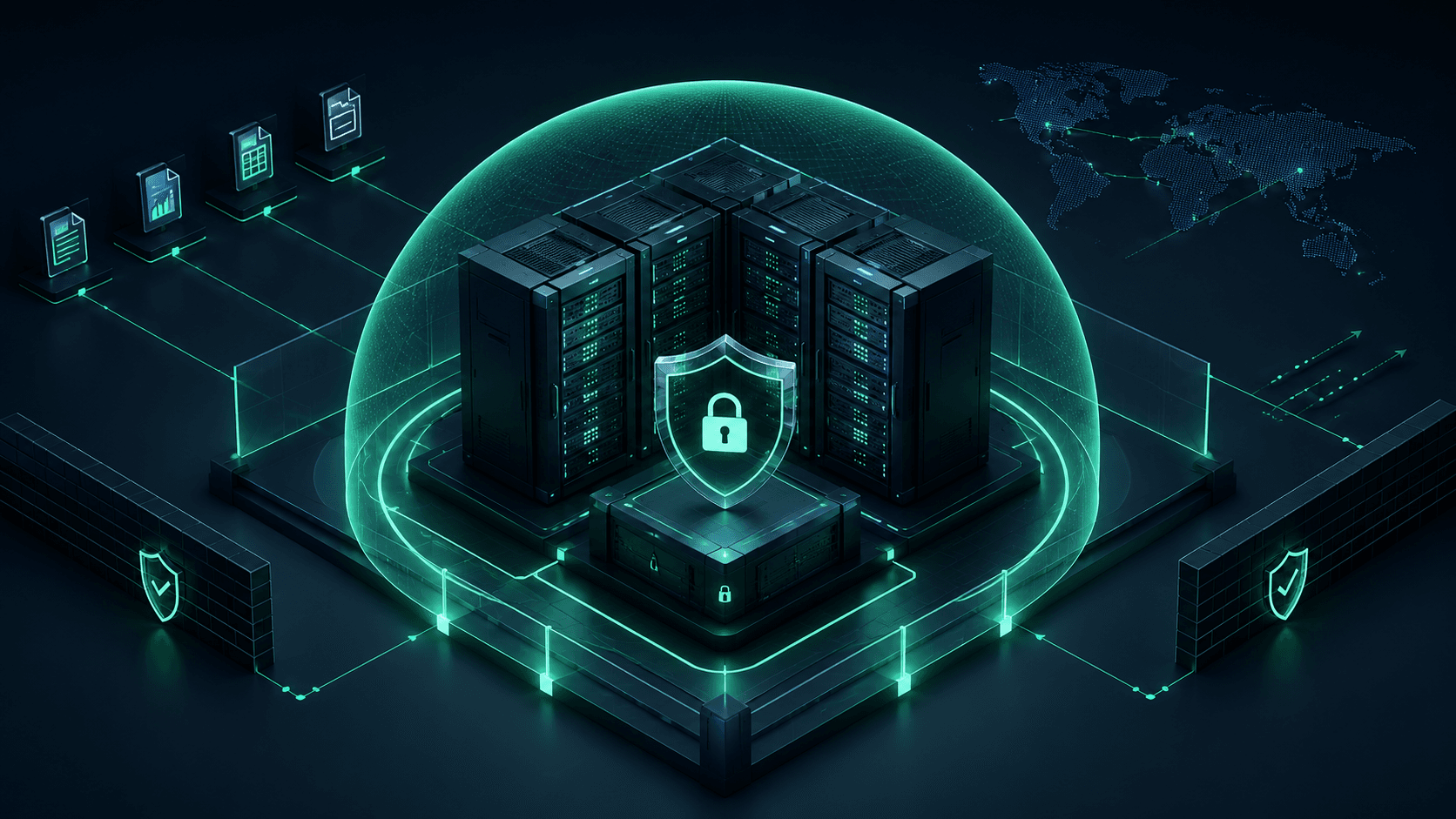
To cut this Gordian knot, the focus is shifting to Sovereign AI—building an AI infrastructure that remains 100% under company control.
Thanks to extremely capable open-weight models (such as Llama 3 or Mistral) and highly optimized inference engines, it is no longer necessary to run hundreds of GPUs. Models can be hosted directly on-premise or in the company's isolated private cloud.
The advantages of this architecture are business-critical for the Mittelstand:
Zero Data Retention
Data never leaves the corporate network. Privacy by Design is guaranteed by default.
Independence
No vendor lock-in with US cloud providers and no unexpected API outages.
Legal certainty
Because processing stays local, complex data-processing agreements for third-country transfers become unnecessary.
Anatomy of a Production-Ready AI Workflow
A successful Sovereign AI system in the enterprise is not a creative chatbot—it is a deterministic workflow engine. To eliminate hallucinations and guarantee reliable B2B processes, we build systems around these principles:
Grounded Retrieval (RAG)
The LLM has no free rein. It may generate answers only from approved internal documents (e.g. via pgvector) and must cite the exact source (document, page, paragraph) for every claim.
Structured Outputs
Model responses are forced through strict validation layers (such as Pydantic or JSON Schema). The system delivers no prose—only processable data for ERP or DMS systems.
Abstention
If the system finds no clear answer in the provided context, it refuses to answer rather than guess.
Frequently asked questions
Why does the German Mittelstand avoid public-cloud AI?
Because confidential documents and intellectual property would leave the company's controlled infrastructure. For regulated B2B firms, unclear GDPR boundaries on international transfers, the EU AI Act, and the risk of unintended model training on trade secrets are often absolute deal-breakers.
What is Sovereign AI?
Sovereign AI means building an AI infrastructure that remains 100% under company control—on-premise or in an isolated private cloud—without sending data to public APIs.
Can on-premise LLMs really automate document workflows?
Yes. With capable open-weight models (e.g. Llama 3, Mistral), grounded retrieval (RAG), structured outputs, and abstention, RFQs, maintenance manuals, and similar documents can be processed reliably—without hallucinations and without the public cloud.
Which architecture principles make Sovereign AI workflows production-ready?
Three principles: grounded retrieval with source citations, structured outputs (Pydantic/JSON Schema) for ERP/DMS, and abstention—the system refuses to answer when the context provides no clear answer.
Ready for Secure Automation?
Moving from insecure cloud experiments to production-ready local AI workflows requires architectural precision. Instead of blindly buying software tools, a serious implementation starts with a precise analysis of the business problem.
Want to automate manual document processes securely? Let's review in a short initial conversation which processes in your team offer the most potential—without data leakage and GDPR-compliant.